Saturday, 25 August 2012

Blog 6 : Digital Markets


WEEK 6 Blog
Raihan Chowdhury
ID: 30097405


Question 1

a) What experiences have you had with shopping online?

I have plenty of experiences about online shopping online. I mostly use ebay and catchoftheday.com.au for purchasing products, because they are cheap and tax free. So, I always pay less while shopping online. 

Online Shopping


b) Describe a good experience?
I bought a Nikon DSLR from ebay website. The delivery was quick and the camera was in perfect condition. I really enjoyed that experience because.i paid really less for that DSLR comparing with the market price.

c) What did you like about the online store you used?
I like the simplicity of ebay because you can search for exactly what you’re after and pay for it with minimal fuss. They also indicate the approximate time it will take for the product to be delivered so there are not weeks of uncertainty.

d) Describe a bad experience?
A bad experience I had recently was when I purchased couple of  lenses on eBay and those were never delivered after payment. This incident has now discouraged me from using eBay and I now prefer to use real places to purchase products to avoid being disappointed and ripped off.

e) What problems did you have with the online store? 
  I encountered problems contacting the seller and after receiving no response I lodged an official complaint with eBay. I also gave the seller negative feedback rating which can be seen by other eBay’ers who buy or sell with the seller in the future.

f) What features make an online store more appealing?
 An online store is more appealing if it has thousands of products to choose from, ships internationally and has an advanced search option that is simple to use. Online stores that offer cheap prices and customer reviews are also popular with online shoppers.

Attracting Target markets through informative Web Shops


g) What features make an online store less appealing? 
An online store is less appealing to customers because they can sometimes have to wait long periods of time for their purchase to arrive. Some customers also feel reluctant about giving away their credit card details online for fear of being targeted by scammers.

h) Should we expect to see the prices of goods and services rise or fall due to the migration of consumers online?
 I think we should expect to see the prices of goods and services fall due to the migration of consumers online. As more and more companies operate online,  I think businesses will be forced to sell their products at cheap prices to compete with their fellow online competitors.


Question 2

a) The dispersion of prices (that is, the spread between the lowest and highest price for a particular product) will narrow?
I agree with this because consumers are always looking for the cheapest price and like to compare products with other retailers before making their purchase. This will force companies to reduce their prices in order to remain competitive.

b) The importance of brand names will decrease?

I disagree with this statement because I believe customers develop a certain loyalty to brands and like to purchase products from that brand because they have been satisfied with the brand’s items in the past and they know what sort of quality they are going to get.

c) Price competition will make all products cheaper?

I agree that price competition will make all products cheaper as companies will be forced to keep their prices low in order to keep up with the fellow competitors in their market.

Digital Markets

d) Digital markets will become dominated by a handful of mega-sites, like Amazon.com.?
I agree that digital markets are dominated by mega sites. Sites 
such as Amazon, eBay and other sites dominate since are well known so consumers turn to them first.

e) How do you think the balance of power between buyers and sellers will change?
I think the balance of power will favour the buyer because they have the luxury of researching a product’s price with several different websites and purchasing the product at the lowest possible price.


f) Prices are cluster online?
The price of a product online is not always the same as some companies are seeking to make a larger profit than other companies who may be looking to sell the identical product at an extremely low price to clear stock.

g) Online prices are elastic. (I.e. immune to change up and down with demand)?

The price of a product online is not always the same as some companies are seeking to make a larger profit than other companies who may be looking to sell the identical product at an extremely low price to clear stock.
Main Online Shopping Sites


h) Online prices are generally transparent (the extent to which prices for a given product or service are known by buyers in the marketplace.)?

Yes, prices online are generally transparent because the buyer has to be aware of how much they are paying for a certain product before they purchase it. In some cases, some websites have hidden fees such as shipping fees and credit card fees that aren’t disclosed until final payment.


Question 3

a) What types of m-commerce services does your cell phone provider offer?
My mobile provider which is Vodafone provides such m-commerce as:
  • Paying bills online
  • Emailing
  • Bluetooth
  • Games
  • Internet

b) Which of these services do you use?
I use all of them. But Internet and Paying bills online are my favourites.
mCommerce Transaction Flow


c) What types of transactions do you perform through your cell 

phone or other wireless device? 
I perform transactions on my mobile phone such as paying my phone bill and transferring money to pay my rent.

d) What types of transactions would you like to perform, but are currently unable to?
I would Like to transfer my mobile credit to another friends phone but that facility is not currently available.

Video: Introduction to mobile commerce, Retrieved from: http://www.youtube.com/watch?v=ygKv-fVm_iQ


e) What is your opinion of wireless advertising/mobile marketing?
I find it particularly annoying when pop-up advertisements take over the computer screen, especially when it is something that is of no interest or relevance to me. But I understand that it can be an extremely effective tool for marketing as most people are either on their mobile phone or online every single day and are exposed to this advertising.

Sources:


Monday, 20 August 2012

Blog 5 : Business Models


WEEK 5 Blog
Raihan Chowdhury
ID: 30097405


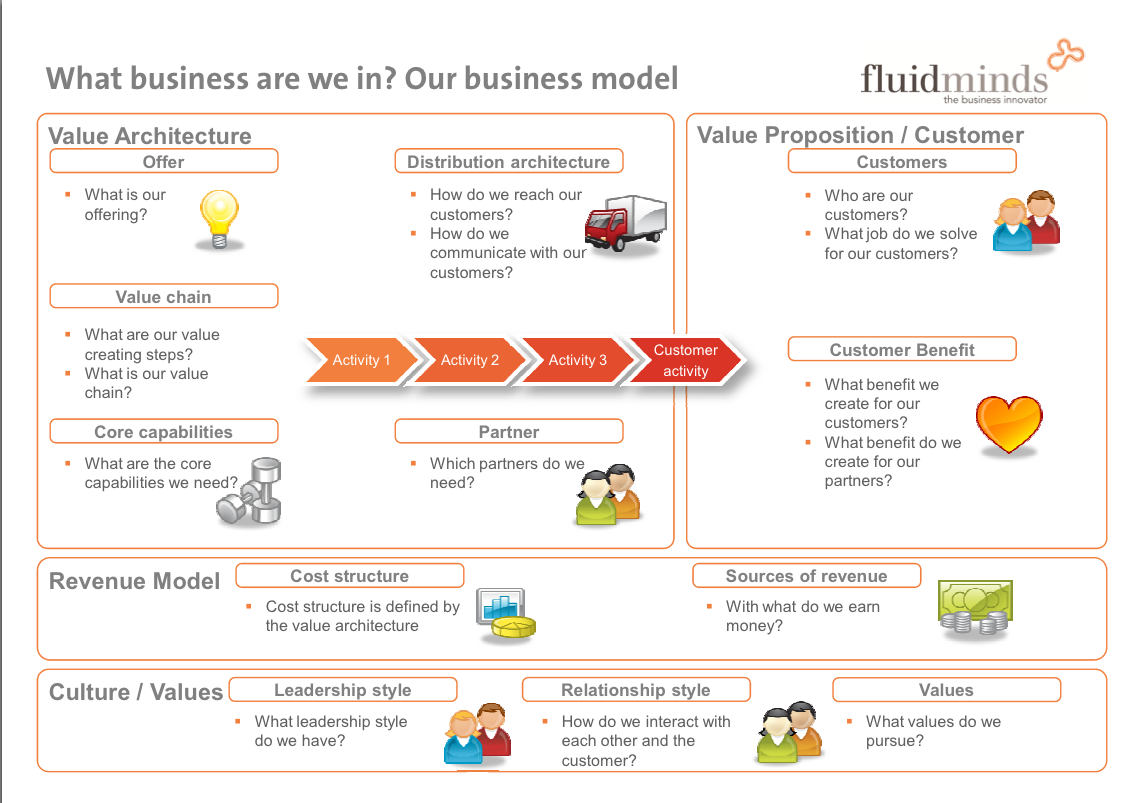
Describe the features of each of these business models, on your blog page, giving an example of each.
Brokerage
Advertising
Infomediary
Merchant
Manufacturer (Direct)
Affiliate
Community
Subscription
Utility.

Ans: 

Figure: Business Models

Brokerage: brokers bring buyers and sellers together and facilitate transactions. Brokers play a frequent role in business-to-business, business-to-consume,or consumer-to-consumer markets. Usually a broker charges a fee or commission for each transaction it enables.

Advertising: the advertising model is an extension of the traditional media broadcast model. The broadcaster, in this case, a web site, provides content and services mixed with advertising messages in the form of banner ads. The banner ads may be the major or sole source of revenue for the broadcaster.

Infomediary data about consumers and their consumption habits are valuable, especially when that information is carefully analyzed and used to target marketing campaigns. Independently collected data about producers and their products are useful to consumers when considering a purchase.

Merchant: wholesalers and retailers of goods and services. Sales may be made based on list prices or through auction.
Manufacturer (Direct): the manufacturer or "direct model", it is predicated on the power of the web to allow a manufacturer to reach buyers directly and thereby compress the distribution channel. The manufacturer model can be based on efficiency, improved customer service, and a better understanding of customer preferences.

Affiliate: the affiliate model, provides purchase opportunities wherever people may be surfing. It does this by offering financial incentives to affiliated partner sites. The affiliates provide purchase-point click-through to the merchant. It is a pay-for-performance model -- if an affiliate does not generate sales, it represents no cost to the merchant. 
Community: the community model is based on user loyalty. Users have a high investment in both time and emotion. Revenue can be based on the sale of ancillary products and services or voluntary contributions; or revenue may be tied to contextual advertising and subscriptions for premium services.

Subscription: users are charged a periodic - daily, monthly or annual - fee to subscribe to a service. It is not uncommon for sites to combine free content with "premium" content. Subscription fees are incurred irrespective of actual usage rates.

Utility: The utility or “on-demand” model is based on metering usage, or a "pay as you go" approach. Unlike subscriber services, metered services are based on actual usage rates. Traditionally, metering has been used for essential services. Internet service providers in some parts of the world operate as utilities, charging customers for connection minutes, as opposed to the subscriber model common in the U.S.

Spend some time looking at the Technology report, particularly the country profiles and rankings. Use some of the data analysis tools to answer the following -


VIdeo:  Global Information Technology Report, 2011 (Soumitra Dutta)

1.What is the Mobile phone use /100 population - compare Australia, USA, China, India and your chosen country.

Ans:

Australia        113.8
USA                90.8
China               55.5
India                43.8
Bangladesh      46.0


2. Internet use / 100 population - compare Australia, USA, China, India and your country.
Ans:

Australia         74.3
USA               78.0
China              28.9
India                 7.1
Bangladesh       3.7


3. Compare main strengths and weaknesses of Australia or your home country in the survey.

Ans:

Strengths of Australia:
Intensity and quality of local competition
Availability of scientists and engineers
Extent of staff training
Local supplier quality
Availability of new telephone lines
Prevalence of foreign technology
Firm-level technology absorption
Capacity for innovation


Weaknesses of Australia: 
Extent and effect taxation
Residential telephone connection charge
Business telephone connection charge

4. What does the survey suggest to you about the Information Technology readiness of Australian business compared to Australian consumers?

Ans: 

The survey suggests the readiness of Australian business is ranked higher in the world. Compared with Information Technology readiness of Australian consumers who rank in the Top 20 in the world. This suggests that Australian businesses are very much Information Technology ready as Australian consumers and other world partners.

Sources:


Thursday, 9 August 2012

Blog 4: Web Analytics


WEEK 4 Blog
Raihan Chowdhury
ID: 30097405


Question 1: Looking at the site usage, what does the terms visits and page views/visits? What does the bounce rate mean and does it vary
much from day to day?

Screenshot from myebusinessanalytics page

Visits: In web terms: A visit to a web site. Commonly used to describe the activity for one visitor of a web site.

When I accessed, Total Visits were 5291 and 208 / day

Page View or Page Hits: The number of times a web page has been visited by a user (non-unique)

54,534 Page views were made per month for Foliospace.com

Bounce Rate: This rate indicates the times users left the site and moved to other web site — in short user has “bounced” from web site

48.54% Bounce Rate till today’s date for foliospace

Question 2:Now look at the traffic sources report. What are the three sources of traffic and where has most of the traffic come from?

These are three main traffic resources
46.46% Search Traffic2,458 Visits
23.47% Referral Traffic1,242 Visits
30.07%  Direct Traffic1,591 Visits


Question 3:What was the most popular web browser used to access the site?
              
Figure: Major Browsers


There were 11 Browsers used to navigate the web site and the popular ones are:


  • Internet Explorer (35.02%)
  • Firefox (21.45%)
  • Chrome (21.32%)
  • Safari (19.22%)
Question 4:How many countries did visitors to Foliospaces come from and what were the top four countries?

5,291 visits came from 66 countries/territories

Top 4 Countries

  • Australia
  • United States
  • Philippines
  • United Kingdom

Question 5: Having clicked every possible link on my analytics, make a few comments on

A)What you can track, on the website you can track:

  •               visits
  •               page on site
  •               bounce rate
  •               traffic source
  •            list of countries that the user comes from
  •               user overview
Figure: Web Analytics


B) What you can track over time
  •          number of visits
  •          number of times pages have been visited
  •          how long people spend on a page
  •          number of countries which visit the website
  •           bounce rate
       
C) What you can`t track


  • gender of the user
  • exact location of the user
  • age of users

Question 6: What do the following terms mean? These are just a few, you may like to add some more and perhaps include them on the Moodle glossary.

High bounce rate indicates that a large amount of visitors are leaving the site after visiting just one webpage.

Key words are specific words that are relevant to a certain search.

Average page depth is the average number of pages a user visits during a single session.

Click through rate the number of times an ad is clicked on, divided by the number of impressions it receives. 

Cookie is a small amount of text data given to a web browser by a web server. The data is then stored on the user's hard drive and is returned to the specific web server each time the browser requests a page from that server. 

Impression a display of a referral link or advertisement on a web page. 

Hyperlink a text reference in a web page that, when clicked, directs the user's browser to another page or document. 

Navigation describes the movement of a user through a website or other application interface. It also refers to the system of available links and buttons that the user can use to navigate through the website. 

Pageview is an instance of a page being loaded by a browser. 

Session a period of interacton between a visitor's browser and a particular website, ending when the browser is closed or shut down, or when the user has been inactive on that site for a specified period of time. 

Unique visitors (or absolute unique visitors) the number of unduplicated visitors to a website over the course of a specific time period and this is determined using cookies. 

URL a Uniform Resource Locator is the address of a specific website on the internet. 

Visitor is a construct designed to come as close as possible to defining the number of actual people who visit a website. 

Visitor session is a defined period of interaction between a visitor and a website.

Comparison shopping is comparing a product's price on competing websites to determine who offers the best price.

Sources:


Thursday, 2 August 2012

Blog 3: Digital Design


Week 3 Blog
Raihan Chowdhury
Id: 30097405


This week we are looking at Digital Design. Look at the PowerPoint presentation and explore some of the links. I recommend spending a good deal of time looking at 'Web Pages That Suck' Listen to the podcast or read the transcript Digital Design on the Digital Enterprise page.
Questions
1. In two paragraphs explain why a customer centric Web site design is so important, yet so difficult to accomplish
       Ans:  Due to a massive surge in the amount of business that is now performed on the Internet, a customer centric web site design that is professional and user-friendly is vital to the success of any business. Organisations are now investing more of their financial resources than ever before, to boast a quality website that is going to attract and maintain customers whilst giving them a distinct advantage on their competitors.


A customer centric website is difficult to accomplish as there are so many different customers that use the Internet and there isn’t one type of website that is perfectly suited for everybody. An internet novice may prefer something very basic and easy to understand, where as a highly experienced internet user may be harder to impress and will be seeking a dynamic website with a modern look and many different features.

2. Define the term 'presence'. Write an additional paragraph that describes why firms that do business on the Web should be more concerned about presence than firms that operate in the physical world.
 Ans:  Presence is, in terms of the internet, is the size of the digital footprint or impact that an organisation or company has. In other words its how great of a reputation the organisation has within the digital environment and how popular they are within it.


Firms that do business on the web should be more concerned about presence because to the average customer that doesn’t see their actual store or office, their website is the first and only impression that a potential customer is going to get of their organisations. It’s imperative that firms invest wisely in their website to give themselves the best possible chance of attracting new customers. Firms that operate in the physical world have the advantage of store appearance and face-to-face customer service to make a positive and lasting impression on their customers.

3. Write three paragraphs to briefly describe the things that Real Estate Agents can best accomplish through (1) their web sites (2) Mass media advertising (3) Personal contact.
Ans:
a) Real estate agents can promote their services and the houses or properties that are available at the moment. This means that they have huge access to the general public in the ways of marketing and the advertisement of their services and products.


 b) With mass media advertising such as news papers, their websites, TV, supported banner ads, search engine optimisation as well as Google images a real estate agent can supply their potential customers with all the information that they would need to supply to sell their properties.


Quantus Newspaper AD: Creating Connections

 c) Through direct personal contact it can give the customers that notice the house or property on the internet or through one of the multiple media formats. This can promote and get the sale through the personalisation of the services, which creates a trust between the customer and the agent.

Blog 2: Navigating the Web


Week 2 Blog
Raihan Chowdhury
Id: 30097405

Part 1 - Navigation

1) Listen to the podcast on Navigation which can be found on the Digital Enterprise Page (Google - the digital enterprise). a) What are the four (4) main points Michael Rappa makes about search? Please write them on your blog page.


Ans:  


The four main points Michael Rappa makes about search:

  • There is now a greater ability for people to look for information. There is an extremely large amount of information on the Internet and it is constantly being updated and uploaded by individuals and organisations.
  • Search engines are becoming progressively linked to advertising and organisations are now paying search engines such as Google and Yahoo to feature their ads on related searches. This increases the likelihood of a consumer using a product or services instead of a product that is displayed on several pages into the search.
  • Despite their being an enormous array of helpful information on the web, there is also just as much useless information that may frustrate search engine users when they’re experiencing difficulty finding what they’re after.
  • There are a lot of people who incorrectly use search engines and instead of using just keywords to narrow their search they are typing in long sentences or questions which provide less accurate results.


info about Machael Rappa: http://digitalenterprise.org/mrappa.html


b) Watch or read the Marissa Mayer interview. Write a paragraph or two, on four points made by Marissa Mayer, that you think were the most interesting or significant for business. There are no right or wrong answers here, I just want your opinion.


Marissa Mayer, V.P. of Search Product and User Experience, Google in a interview on 2009. Retrieved from  http://www.youtube.com/watch?v=7Nw5j6aI8sg

Ans: Marissa Mayer talks about the variety of ways search engines via the internet are used. There's just so many different ways search engines can be accessed by their phones, from their cars (Mayer, 2009) and also now the very popular 'mobile' method. These are challenges people like Mayer are considering to improve search engines even further for greater and better access via these methods and the original computers of such. By using mobile phones it help the public connect better with the information their after and better connection with friends and family. The ease of the access of information mobile phones provide, it give consumers quick mind satisfaction, solutions to their questions and access geographically anywhere, anytime. A key strategy for any business is satisfying their customers. As mentioned in the previous question, the whole world of the wide world web touches millions of people every second of the day. Mayer recognises that her work with Google is rewarding in that "working on really amazing ideas that touch millions of people's lives and trying to help those people get better information, hopefully make better decisions is just really fulfilling." (Mayer, 2009). Business is becoming professionally global in any respects. Having global exposure and networks can only make business bigger in consumers, opportunities and wider base for recruiting staff.

Mayer also spoke about advertisements on the Google search engine pages. Google's goal is using advertisements is to produce advertisements that are as 'useful' as their results. These advertisements are only used on appropriate pages. It's a smart move by Google as businesses want as much exposure as they can to the consumer world. And this does that without consumers Google-ing the actual business of such. Mayer also spoke about ideas. Ideas can be extremely important for creativity for new business ideas. "
It all starts with an idea." (Mayer 2009). Everything starts as an idea. Ideas can be for anything, marketing to strategic planning to vision.

Marissa Mayer’s statement  ‘search is in its infancy’ is very true, as the internet is constantly evolving and finding simpler and faster ways for internet users to find the information they are looking for. 

Part 2 - History of the Internet


2) Please watch the Bill Joy video, and it will give you a good background to the Internet and particularly to the emergence of the World WIde Web.From the video - please answer (on your blog page) - 
a) So what are the 6 webs?


Ans: The six webs are as following:


  The Near Web -- that is emerging around the smaller screen, the laptop
  The Here Web -- the smartphone, the mobile screen
  The Far Web -- TV and lean back technologies
  The Weird Web -- the smart, intelligent interface that knows what your body does and can read you
  The B2B Web -- what happens on Wall Street, taking over how business interacts
  The D2D Web --smart censors that manage environment and how they relate


 Bill Joy. (2011 February 12). In Wikipedia. Retrieved August 2, 2012 from:  http://en.wikipedia.org/wiki/Bill_Joy


b) Could there be more?


Ans:  Yes, there could be more webs as ideas and technology develop. The web is becoming such an everyday part of people’s lives and at the rate technology is developing there is bound to be more webs created in the near future.


c) What does it mean for business?


Ans:  This means, for business, that they have to be conscious in their everyday operations. Many companies use high end, high content web-programming with a lot of content on their web pages, which is good for promotion of their services and products in an adequate way but, however, with the rise of the "here" web and the smart phones many people do not need or can not handle image and video text and rich web pages when their smart phones are searching for the requires products.

 Sources:
 Rappa,M.(2009, May 31). Managing the Digital Enterprise. Retrieved on August 2, 2012 from: http://digitalenterprise.org/navigation/nav.html